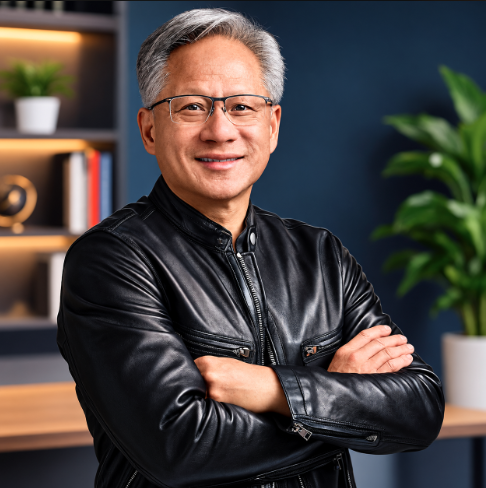
The reports surrounding NVIDIA chief executive Jensen Huang have raised a question that reaches well beyond Silicon Valley: where does a private mistake end, and where does a company’s responsibility to protect its information begin?
Huang is one of the most influential executives in technology. NVIDIA’s processors have become central to the artificial-intelligence industry, powering the data centres behind many of the services now competing to define the next era of computing. That position makes any allegation involving the company’s leadership, business relationships or security unusually consequential.
The story now involves an acknowledged affair, claims of a possible foreign-intelligence operation and an independent investigation announced by NVIDIA’s board. Those are serious developments, but they are not all established facts. Here is what has been reported, what the company has confirmed and what remains unanswered.
## The reports involving Jensen Huang and Alice Huang
Recent reporting, led by The New York Times and subsequently covered by international news organisations, linked Jensen Huang to a woman identified as Alice Huang. She was described as a former executive of Megaspeed, a Singapore-based company that has purchased NVIDIA chips.
The reports alleged that US intelligence officials suspected Alice Huang of having links to Chinese intelligence and of seeking information about Jensen Huang and NVIDIA. The claims have attracted attention because of Megaspeed’s reported business dealings and the wider scrutiny of technology exports to China.
It is important, however, not to turn an allegation into a conclusion. The public reporting has not established that Alice Huang was an intelligence operative or that she obtained confidential NVIDIA information. Reuters said it could not independently verify some of the claims in the original report, including details about her current employment. The precise information allegedly sought, whether any sensitive material changed hands and what Jensen Huang knew remain unclear.
Huang has acknowledged having an extramarital affair and apologised to his wife, family, colleagues and shareholders, according to reports of a message he sent to NVIDIA staff. He accepted responsibility for his personal conduct. That admission is significant in its own right, but it does not prove the separate allegations about espionage.
## Why NVIDIA’s board has opened an investigation

On November 8, 2026, NVIDIA’s board of directors said it had initiated an independent investigation in light of the reporting about a possible foreign-intelligence effort targeting its chief executive. Independent directors, working with outside legal counsel, are overseeing the review. Huang has said he supports the process and will cooperate.
The board also stated that it currently has no reason to believe NVIDIA’s confidential information or US national security has been compromised. That is an important part of the company’s public position. The investigation is intended to establish whether the reported approach occurred, whether company information was exposed and whether any internal safeguards were affected.
Huang remains chief executive while the review continues. There has been no announced finding that he must leave his position, and there has been no public conclusion that NVIDIA’s secrets were accessed. Equally, the board’s statement should not be mistaken for a final report clearing every question. The review is ongoing.
## The Singapore connection and the wider chip restrictions
Megaspeed’s reported connection to the story has drawn attention to Singapore and to the international controls surrounding advanced semiconductors.
The United States has restricted exports of certain advanced chips to China, arguing that the technology has national-security implications. Megaspeed, which is based in Singapore and has bought NVIDIA chips, has reportedly been investigated by US authorities over suspicions that it helped China obtain chips that could not legally be shipped there directly.
Singapore’s government has rejected suggestions that its officials had separately raised concerns about Alice Huang’s alleged intelligence links. It has said investigations concerning Megaspeed were ongoing and that companies operating in Singapore are expected to comply with applicable laws. Singapore has also made clear that it does not condone businesses using the country to circumvent foreign export controls. China has rejected the espionage allegations as unfounded.
These details matter, but they should be kept distinct. An investigation involving a company’s possible export-control conduct does not establish that an individual connected to that company engaged in espionage. Nor does the existence of a reported intelligence concern prove that a company’s systems or trade secrets were penetrated.
## What happens next?
For now, the central questions are evidential. What exactly prompted the intelligence concerns described in the reporting? Was any confidential information requested or obtained? Did any company systems, personnel or business processes become vulnerable? And did NVIDIA’s existing controls work as intended?
The board’s independent review is the appropriate place for those questions to be examined. Its conclusions may have consequences for NVIDIA’s governance, internal controls and leadership, depending on what the evidence shows. Until then, predictions about Huang’s future at the company remain speculation.
There is also a wider corporate lesson here, although it does not require us to assume that the most serious allegations are true. A company of NVIDIA’s scale cannot rely solely on the judgement or reputation of its chief executive. It needs independent oversight, clear conflict-of-interest procedures, careful scrutiny of business relationships and strong controls over access to sensitive information. Those safeguards matter precisely because even highly successful organisations can face risks that begin outside the boardroom.
Huang’s admission about his personal life has already put him under intense public scrutiny. The separate allegations about a possible intelligence operation now place questions of corporate security and governance before NVIDIA’s board. Keeping those two matters distinct is essential to understanding the story fairly.
At this stage, the confirmed position is that NVIDIA has opened an independent investigation, Huang remains CEO and the board says it has no reason to believe company secrets or US national security were compromised. The allegations involving Alice Huang and any possible intelligence activity have not been established in the public record.
The next meaningful development will not be another round of speculation. It will be what the investigation can substantiate.
[Pan-African Tech & AI](/tech) [Breaking News & Politics](/news)
## Sources and further reading
- [NVIDIA: Statement from the Board of Directors, November 8, 2026](https://investor.nvidia.com/news/press-release-details/2026/Statement-from-NVIDIA-Board-of-Directors/default.aspx) - [Reuters: What we know about NVIDIA’s probe into CEO Jensen Huang](https://www.investing.com/news/stock-market-news/explainerwhat-we-know-about-nvidias-probe-into-ceo-jensen-huang-5010580) - [Associated Press: Reporting on Jensen Huang and the NVIDIA investigation](https://apnews.com/article/df45d21030691f59c67bc0b35adb89a2) - [Al Jazeera: Why Jensen Huang is at the centre of a US-China spy controversy](https://www.aljazeera.com/news/2026/11/9/why-is-nvidias-jensen-huang-at-the-centre-of-a-us-china-spy-scandal)